


 +86 18130251359
 teflowpumps@tlpumps.com


In chemical production, certain process media are particularly temperature-sensitive: they thicken, crystallize or even solidify with a slight temperature drop. At best, this clogs pipelines and disrupts production capacity; at worst, it seizes the impeller and damages equipment. Stable delivery of media such as resins, asphalt, molten urea, high-concentration salt solutions and dye liquids relies on the support of heating jackets.
Many users face a common question during selection: what is the difference between single and double heating jackets, and how to choose between them? This article systematically breaks down the two mainstream configurations of chemical pump heating jackets from the perspectives of structural principle, application scenarios and key selection criteria.
1. Core Principle of Heating Jackets: A Constant-Temperature "Coat" for the Pump Casing
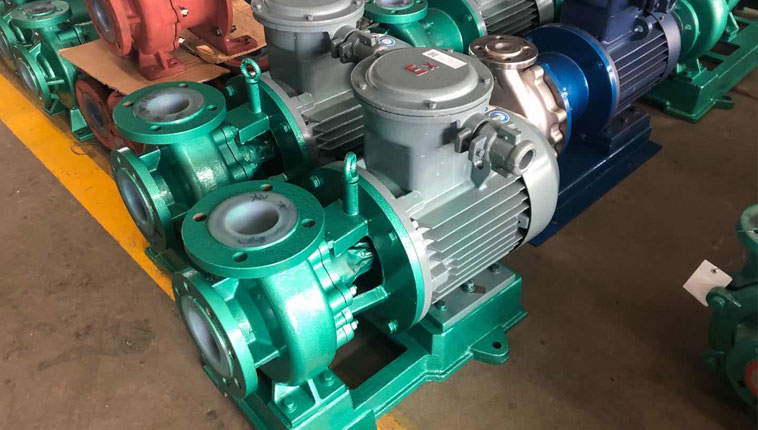
A jacketed pump is essentially a standard chemical pump with an independent hollow jacket added to the outer shell of the pump casing. Heating media such as steam, thermal oil or hot water are fed into the jacket to maintain a stable temperature of the medium inside the pump chamber through indirect wall heat transfer, preventing solidification, crystallization or sharp viscosity rise caused by heat dissipation.
In simple terms: the inner layer conveys the process medium, while the outer layer carries the temperature-control medium. The two layers do not come into contact, and heat is transferred through the metal wall.
This design addresses three major industry pain points:
- Prevents solidification and pump blockage: the medium will not solidify and cake in the pump chamber during shutdown or at low ambient temperatures
- Ensures stable viscosity delivery: high-viscosity media have better fluidity at stable temperatures, resulting in higher hydraulic efficiency
- Guarantees process continuity: avoids medium crystallization, stratification or degradation due to temperature fluctuations, ensuring product quality
2. Single Heating Jacket: Basic Temperature Control, Cost-Effective and Practical
Structural Features
As the name suggests, a single heating jacket only adds a jacket cavity to the outer wall of the pump casing, with no insulation treatment on the pump cover, seal chamber or other components. The jacket and pump casing are usually integrally cast or welded to form an annular flow channel for the heating medium. Some products are equipped with internal spiral baffles to extend the heat exchange path and improve heat exchange efficiency.
The heating medium inlet and outlet are generally arranged at the top and bottom of the pump casing, with either top-in bottom-out or bottom-in top-out flow patterns. Combined with high-point venting and low-point draining designs, this ensures the jacket is fully filled with heating medium without dead zones of accumulated liquid.
Technical Advantages
1. Simple structure and lower cost: only the pump casing is jacketed, with less machining work and lower procurement cost than double jackets
2. Easy maintenance: fewer structural components mean fewer failure points and convenient disassembly for maintenance
3. Meets basic insulation requirements: fully sufficient for working conditions with low solidification points and adequate insulation margin
Applicable Scenarios
- Media with a solidification point slightly above ambient temperature and low insulation difficulty
- Continuous operation conditions, where frictional heat from the pump itself helps maintain temperature
- Conventional crystallizing media with limited budget and less stringent temperature control accuracy requirements
- Conditions where the medium mainly flows through the main pump chamber with little retention in the pump cover area
3. Double Heating Jacket: Full-Range Temperature Control, Higher Stability and Reliability
Structural Features
A double heating jacket features independent heating jackets on both the pump casing and pump cover. The two jackets can be connected in series or connected to separate heating medium circuits. Some high-end models also include the seal chamber area in the insulation scope, forming a three-section insulation structure ("pump casing + pump cover + seal chamber"), also known as a triple jacket design.
The core value of this design is eliminating temperature dead zones near the pump cover and mechanical seal. In actual operation, the pump cover area has low medium flow velocity and long retention time, making it the most prone to cooling and crystallization – an area that single jackets cannot cover. By adding a "thermal coat" to the pump cover, double jackets achieve constant temperature throughout the entire flow chamber.
Technical Advantages
1. No temperature dead zones: uniform heating across the entire pump chamber, preventing local cooling and solidification of the medium near the pump cover and seal faces
2. More start-stop friendly: less risk of seizure due to medium solidification at the pump cover after shutdown and restart, especially suitable for intermittent operation
3. Higher temperature control accuracy: larger overall heat capacity reduces temperature fluctuations, keeping medium temperature deviation within a narrower range
4. Adaptable to extreme media: handles demanding media with high solidification points, high viscosity and high crystallization tendency
5. Protects sealing components: stable seal chamber temperature prevents seal face deformation and uneven thermal expansion caused by temperature differences, which can lead to leakage
Applicable Scenarios
- Media with high solidification points and high crystallization tendency, such as molten urea, asphalt, hot melt adhesives, and certain phenols/acid anhydrides
- Production lines with intermittent operation and frequent start-stops, where the pump is prone to solidification and blockage after shutdown
- Fine chemical and polymerization processes with temperature-sensitive media and high temperature control accuracy requirements
- Applications with extremely high-viscosity media that flow slowly and tend to stagnate in the pump cover area
- Installation in cold northern regions or outdoors, where ambient heat loss is significant
4. Selection Decision: Three Key Judgment Dimensions
The choice between single and double jackets is not about which is better, but about matching the working conditions. A quick judgment can be made from the following three dimensions:
1. Medium properties – the core judgment basis
- For media with a solidification point below 40°C and weak crystallization tendency, a single jacket is usually sufficient
- For media with a solidification point above 60°C, solid at room temperature, or that crystallize rapidly when cooled, prioritize double jackets
- For highly viscous materials with viscosity greater than 1000 cSt, double jackets are recommended to avoid viscous caking in the pump cover area
2. Operating conditions – start-stop frequency is critical
- For 24-hour continuous production lines with rare shutdowns, single jackets offer better cost performance
- For batch production with multiple start-stops per day, or outdoor pumps prone to freezing in winter, double jackets are a safer choice
- For standby pumps in long-term hot standby status, double jackets allow immediate startup without seizure risk
3. Process requirements – temperature control accuracy sets the upper limit
- For general conveying with low sensitivity to temperature fluctuations, single jackets can meet requirements
- For processes involving polymerization, precise proportioning, or product quality sensitive to temperature, double jackets are more reliable
5. Operation and Maintenance Notes
Whether single or double jacket, proper operation is essential to achieve optimal performance:
1. Supply heating medium before startup, shut it off after shutdown: preheat the pump casing by feeding heating medium 10–30 minutes in advance before startup, and confirm the medium in the pump chamber is melted before starting the pump; after shutdown, close the heating medium only after the medium in the pump is drained or cooled down.
2. High-point venting and low-point draining are indispensable: vent all air from the jacket before operation to prevent air lock from affecting heat transfer; for steam heating, drain condensate regularly to avoid accumulated liquid at the bottom that reduces heat exchange efficiency and causes local corrosion.
3. Strictly prevent cross-leakage between jacket and process medium: damage to the partition wall between the jacket and pump chamber can cause serious accidents from mixing of heating medium and process medium. Regular jacket hydrostatic tests and leak detection are critical for safety.
4. Material compatibility for both sides: inner wetted parts must resist corrosion from the process medium, while the outer jacket must resist corrosion from hot water/steam. Mismatched materials may cause galvanic corrosion, so both must be confirmed during selection.
Conclusion
There is no absolute superiority between single and double heating jackets – only suitability for specific working conditions. The single jacket is a cost-effective basic option for continuous delivery of conventional easily-crystallizing media; the double jacket is an advanced solution for full-range temperature control, specialized for demanding conditions with high solidification points and frequent start-stops.



 +86+0563-5093318

